Martin "Louis" The King: the fashion legacy of Kanye West

Few artists have treated clothing as part of the album rollout, the stage design, and the public persona as completely as Kanye West. For more than two decades, he has used fashion not as a side project, but as another language. The pink polo, the shutter shades, the leather kilt, the oversized hoodie, the earth-toned Yeezy uniform, each marked a shift in how people dressed and how brands thought about celebrity influence.
Kanye West's fashion legacy is complicated, wide-reaching, and impossible to separate from modern streetwear, luxury fashion, and sneaker culture. His impact does not come from one garment or one collaboration. It comes from the way he blurred categories that once felt separate. Rap could sit at Paris Fashion Week. Sneakers could create luxury-level demand. Hoodies and sweatpants could carry the same cultural weight as tailoring.
His fashion story is also tied to controversy, brand breakups, and public criticism. That context matters. Still, when looking at the clothes, the collaborations, and the industry changes around him, the scale of his influence is clear.

He helped turn streetwear into the default fashion language
Before Kanye West became a fashion force, streetwear already had deep roots. Hip-hop, skate culture, Japanese fashion, workwear, and sportswear had shaped it for decades. Brands like Supreme, A Bathing Ape, Stüssy, Rocawear, and FUBU built culture before luxury houses fully understood it.
West did not invent streetwear. His impact came from amplifying it and reframing it for a broader fashion audience.
In the early 2000s, he stood apart from the dominant rap look of oversized jerseys, baggy denim, and heavy chains. His “College Dropout” era leaned into rugby shirts, polos, backpacks, varsity jackets, and sneakers. It was preppy, colorful, and self-aware. That look opened space for a different kind of rap image, one that mixed student style, thrift influence, and designer aspiration.
Then came his more experimental phases. He embraced slim denim, bomber jackets, rare sneakers, graphic hoodies, and high-end accessories. He pulled from skate shops, runway collections, and Japanese streetwear with equal interest. That mix became a blueprint for the modern fashion enthusiast who sees no contradiction between a vintage tee, designer coat, and hyped sneaker.
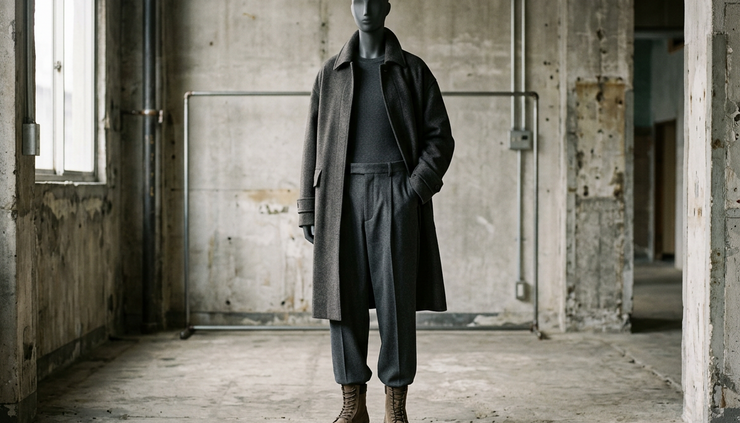
By the mid-2010s, his Yeezy collections pushed streetwear toward minimalism. The palette shifted to sand, stone, charcoal, olive, and washed brown. The shapes became oversized, distressed, and layered. Longline tees, cropped jackets, sweatpants, military-inspired outerwear, and tonal dressing became part of the mainstream visual language.
This influence showed up everywhere:
Oversized hoodies became everyday style staples.
Neutral color palettes replaced loud logo-heavy looks for many shoppers.
Distressed knits and lived-in basics gained runway credibility.
Athleisure moved from gym-adjacent to fashion-forward.
Layered silhouettes became common in both streetwear and luxury collections.
West made casual clothing feel serious without making it stiff. He treated the hoodie with the same intention others gave to a blazer.
His high fashion presence changed who got to sit in the front row
Kanye West’s relationship with high fashion was not always smooth. For years, he spoke openly about wanting access to the fashion world and not being fully welcomed by it. That tension became part of his story. He was a global musician with massive cultural reach, yet many luxury gatekeepers treated him as an outsider.
His persistence mattered because it reflected a larger shift. Hip-hop had become one of the most powerful cultural forces in the world, but high fashion was slow to recognize its creators as design voices rather than just celebrity customers.
West pushed into that space through relationships, collaborations, and public appearances. He worked with Louis Vuitton on a sneaker line in 2009. He connected with designers including Riccardo Tisci, Virgil Abloh, Kim Jones, and Demna. He attended fashion weeks, interned at Fendi alongside Virgil Abloh, and studied the mechanics of design, production, and presentation.
One of his most memorable high fashion moments came during the “Watch the Throne” era, when he wore a Givenchy leather kilt on stage. The look sparked debate far beyond fashion circles. Some mocked it. Others saw it as a bold challenge to narrow ideas about masculinity in hip-hop. Either way, people talked. That is part of fashion’s power. A garment can expose what a culture accepts, resists, or fears.
His runway ambitions also reshaped celebrity fashion expectations. Many musicians had clothing lines before him, but West wanted acceptance as a designer within the luxury system. His early womenswear shows received harsh criticism, yet he kept building. Yeezy Season 1, launched with Adidas, marked a clearer direction. It presented a full visual world: muted colors, utilitarian shapes, body-conscious knits, military references, and sneakers as the anchor.
That approach influenced how brands now build fashion universes around music, performance, and lifestyle. The modern celebrity designer is expected to offer more than merch. They need a worldview. West helped set that expectation.
The sneaker world felt his influence most clearly
If one area shows Kanye West’s fashion impact in the most measurable cultural way, it is sneakers. His work helped turn artist-designed sneakers into major fashion events.
The Nike Air Yeezy line was a landmark. Released in the late 2000s and early 2010s, it proved that a non-athlete musician could drive serious sneaker demand at the highest level. Before that, signature sneakers were mostly tied to athletes. West helped expand the idea of who could shape sneaker culture.
The Air Yeezy 2, especially in its most coveted colorways, became a defining object of the resale era. It was not just a shoe. It was a status symbol, a collector’s item, and a sign that music, streetwear, and sneaker culture had fully merged.
His move to Adidas took that influence further. The Yeezy Boost 750 introduced a high-top, minimal, luxury-leaning sneaker shape. The Yeezy Boost 350 became one of the most recognizable sneakers of the 2010s, with its knit upper, streamlined form, and easy styling. Later models, including the 700, Foam Runner, and Slide, pushed into chunkier, stranger, and more sculptural territory.
Some designs looked odd at first. Then the market caught up.
That pattern became part of West’s design identity. He often introduced shapes that felt awkward, bulky, or unfinished, only for similar ideas to spread later. The chunky “dad shoe” trend did not belong to him alone, but Yeezy helped make bulky sneakers feel current. Foam footwear, earth tones, sock-like uppers, and futuristic slip-ons all gained broader attention through the Yeezy line.
The sneaker industry also learned from the release model. Scarcity, surprise drops, raffles, resale buzz, and social media anticipation turned sneakers into cultural events. Yeezy releases were not the only force behind that system, but they became one of its clearest examples.
Collaboration | Why it mattered |
Nike Air Yeezy | Showed that a musician could carry a major signature sneaker line. |
Louis Vuitton sneakers | Connected hip-hop celebrity influence with luxury footwear. |
Adidas Yeezy | Brought minimalist, high-demand sneakers to a global audience. |
Yeezy Gap | Tried to make West’s design language more accessible through a mass retailer. |
Yeezy Gap Engineered by Balenciaga | Blended celebrity design, luxury styling, and mall-scale distribution. |
His collaborations became cultural signals
Kanye West’s key collaborations tell the story of his changing fashion goals. Each one marked a different step in his attempt to connect streetwear, luxury, and mass access.
His Louis Vuitton collaboration placed him within the luxury conversation. It signaled that sneaker culture was not separate from high fashion. It could exist inside it.
His A.P.C. capsule collections, released in the early 2010s, focused on elevated basics. The pieces were simple, often plain at first glance, but they reflected West’s interest in fit, fabric, and uniform dressing. The collaboration helped frame everyday garments as design objects.
Adidas gave him the scale he had long wanted. With Yeezy, West built a footwear and apparel universe that reached far beyond fashion insiders. He sold an aesthetic: muted colors, worn textures, futuristic sneakers, and stripped-back styling. Even people who never bought Yeezys could recognize the look.
Gap represented another dream, mass accessibility. West had often spoken about wanting to make well-designed clothing available to more people. The Yeezy Gap Round Jacket became an instant visual marker when it appeared. It was bold, puffy, and simple, almost like a wearable object.
The later Yeezy Gap Engineered by Balenciaga project reflected the extreme merging of worlds that West had long pursued. A mall brand, a luxury fashion house, and one of the most famous musicians in the world met in one project. The partnership also showed how much the industry had changed. A collaboration that once would have seemed unlikely became a major fashion conversation.
His brand relationships also show the limits of celebrity power. Adidas ended its partnership with West in 2022 after his antisemitic remarks and public backlash. Gap also ended its partnership earlier that year. These separations were significant business and cultural moments. They showed that influence can build enormous value, but public conduct can also put that value at risk.

His personal style shaped trend cycles
Kanye West’s personal style has often moved before the mainstream. That does not mean every look worked or aged well. It means people paid attention, copied, debated, and reacted.
His style can be read in phases.
The college-prep era used polos, rugby shirts, backpacks, and bright color. It challenged rap’s harder visual codes at the time and made room for a more playful kind of self-presentation.
The luxury streetwear era brought slim jeans, leather jackets, designer sneakers, and layered tops. It reflected a generation that wanted to mix fashion week references with everyday clothing.
The “minimal uniform” era leaned into neutral colors, oversized sweats, military jackets, and worn-in textures. This became one of his most copied style periods. It made dressing down look highly considered.
The more architectural Yeezy era introduced bulkier proportions, face coverings, heavy boots, and stark monochrome outfits. Some of these choices stayed niche, but they influenced editorial styling, stagewear, and the darker direction of some street fashion.
His styling choices also helped normalize ideas that now feel common:
Wearing hoodies and sweatpants as a complete outfit, not an afterthought.
Pairing luxury outerwear with sneakers.
Treating neutral colors as bold style choices.
Mixing utilitarian clothing with high fashion pieces.
Choosing silhouette over obvious branding.
The most important thread is control. West often dressed as if he were building a character or environment, not just an outfit. That influenced how artists, athletes, and influencers now approach style. A wardrobe became part of world-building.
His cultural impact goes beyond clothes
Kanye West’s fashion impact is not only about what people wore. It is about who gained permission to participate.
He helped make it harder for high fashion to ignore hip-hop as a design force. He also helped expand the role of the musician in fashion. A music artist could be a creative director, a collaborator, a runway presence, and a product visionary. Today, that path looks normal. When West began pushing for it, it looked much less certain.
His work also fed a broader conversation about taste. For a long time, fashion institutions often treated streetwear as lesser than luxury. West challenged that hierarchy by wearing and designing clothes that pulled from both. A hoodie could be aspirational. A sneaker could hold the same attention as a handbag. A runway show could look like a concert, an art installation, and a product launch at once.
There is also a democratic promise in his best fashion ideas. He often spoke about wanting good design to reach more people. The results were mixed, especially when products remained expensive or hard to buy. Yet the goal mattered. It reflected a major question in modern fashion: can strong design exist at scale without losing meaning?
His influence also helped fuel the rise of neutral, gender-fluid, and comfort-driven dressing. Oversized silhouettes, soft layers, muted palettes, and less rigid styling made clothing feel more open. Many of these ideas came from wider fashion movements, but West’s visibility helped push them into popular culture.
At the same time, his legacy cannot be separated from harm caused by his public statements. The end of major partnerships showed that fashion brands now weigh cultural influence against public accountability. That shift is part of the industry too.
The industry learned both the power and risk of celebrity fashion
Kanye West’s rise changed how brands think about collaboration. Before, a celebrity might appear in a campaign or attach a name to a product. West pushed for deeper creative involvement. He wanted to shape the design language, presentation, and cultural meaning.
Brands took notice. The industry now regularly builds partnerships around musicians, athletes, actors, and artists who bring their own audiences and aesthetics. A successful collaboration can create attention that traditional advertising cannot match.
Yet West’s career also shows the fragility of that model. When a brand becomes closely tied to one public figure, it shares in both the appeal and the risk. Yeezy’s success made that clear, and its collapse as a corporate partnership made it clearer.
The effect on the fashion industry is still visible:
Sneaker releases became entertainment events.
Luxury brands took streetwear more seriously.
Celebrity-led design became a major business model.
Neutral basics and oversized silhouettes gained lasting appeal.
Collaborations became central to fashion marketing and product strategy.
Public accountability became a larger part of partnership decisions.
West’s fashion career offers a rare case where one person influenced product design, styling, retail strategy, runway presentation, and cultural debate at the same time.

Why his fashion legacy still matters
Kanye West did not create streetwear, luxury sneakers, or celebrity fashion. His legacy comes from the way he connected them and forced the wider culture to look. He made contradictions feel natural: underground and mainstream, casual and expensive, strange and wearable, musician and designer.
His best fashion work carried a clear point of view. It made people reconsider the hoodie, the sneaker, the uniform, and the role of hip-hop in luxury spaces. It also helped shape the way modern brands chase cultural relevance, build hype, and treat collaborations as major creative events.
The legacy is not clean. It includes brilliant instincts, uneven execution, major influence, and serious controversy. That mix makes it more important to study with honesty rather than simple praise.
What remains is a shift in fashion’s center of gravity. The runway moved closer to the street. The sneaker became a luxury object. The musician became a design voice. And a generation learned that style could be a full creative statement, not just something to wear.

Comments